What Is a Drip Edge? The Roof Part Behind Rotting Fascia
07
Oct
A drip edge is a strip of bent metal that runs along the edges of your roof. It sits under the first row of shingles and hangs a little past the roof deck, so rain leaves the roof in the right place: into the eavestrough, not behind it. It is a small part, and it is easy to miss from the ground. When it is missing, bent or put in the wrong way, the damage shows up somewhere else. That is why many homeowners call about the eavestrough or the fascia first, when the cause is at the edge of the roof.
What a drip edge does
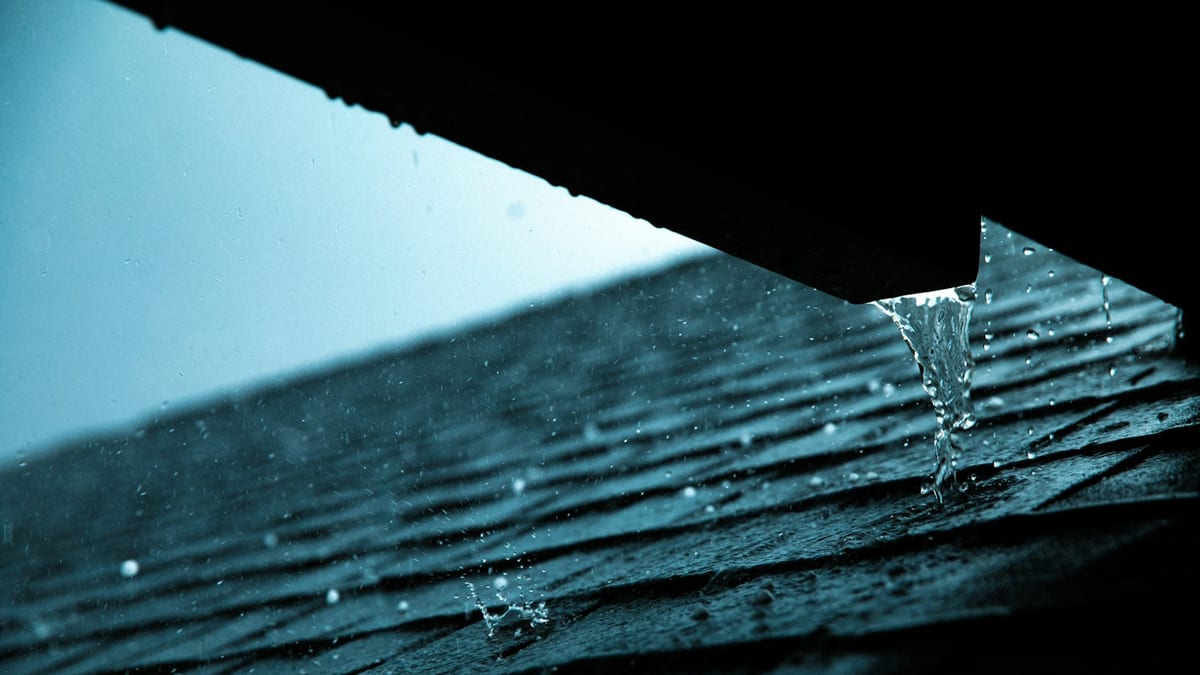
Water does not fall straight off a roof edge. As it reaches the last shingle, part of it curls back under the edge and runs along the underside. Without a drip edge, that water reaches three things that are not built to stay wet:
- The edge of the roof deck. The plywood or boards under the shingles soak up water at the edge and start to rot from there.
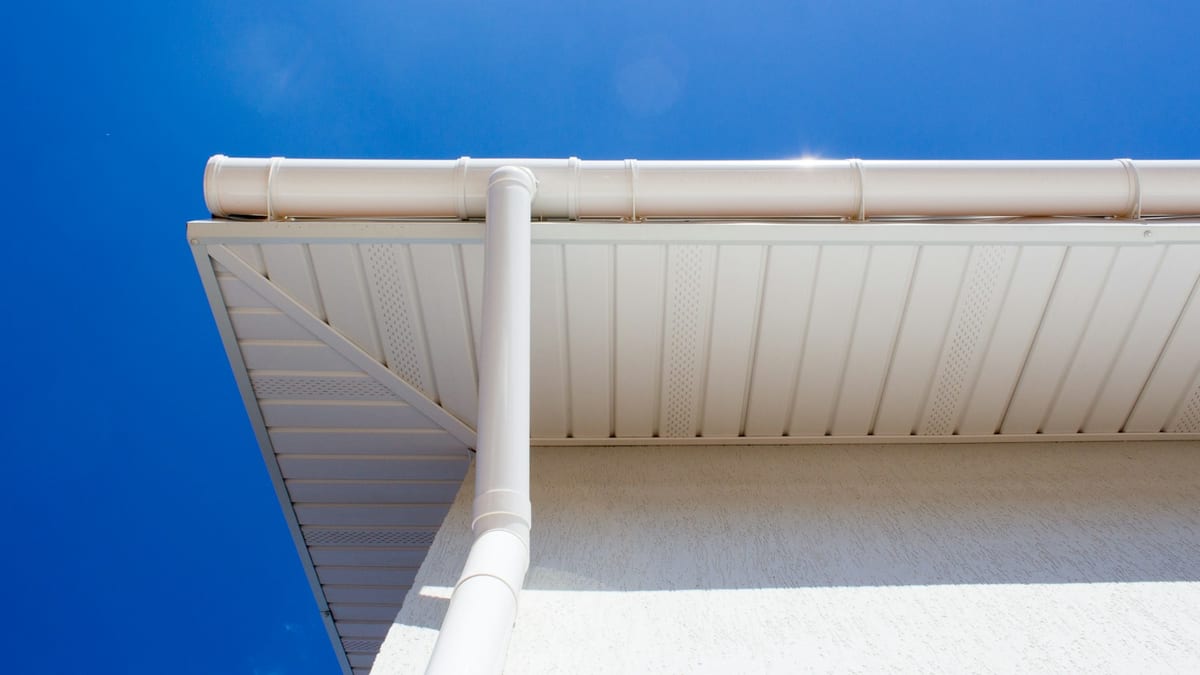
- The fascia board. This is the board the eavestrough hangs on. Water that runs down behind the eavestrough keeps it wet.
- The soffit. The panels under the overhang get the water that the fascia does not stop.
A drip edge breaks that path. Its lower lip stands off from the fascia, so water drips clear of the wood and lands in the eavestrough. On the sloped sides of the roof, called the rakes, it covers the edge of the deck and sheds water off the side. The Asphalt Roofing Manufacturers Association strongly recommends a drip edge on every shingled roof, and some local building codes require one.
The two common shapes
Drip edge comes in two shapes that you can tell apart by looking at the end of a piece:
- L-shaped (often called type C). A simple bent angle. It covers the deck edge but sits close to the fascia.
- T-shaped (often called type D). The lower lip kicks out away from the board, which throws water further from the fascia and into the eavestrough.
Both are usually made of aluminum or galvanized steel. On a metal roof, the edge trim is part of the panel system and does the same job.
Signs your drip edge is missing or failing
You can check most of these from the ground or a ladder, without walking on the roof:
- Water runs behind the eavestrough. In a heavy rain, or on a spring afternoon when the snow on the roof melts, watch the eavestrough. If water drips from behind it, between the eavestrough and the house, the roof edge is not sending water into it.
- Stains or peeling paint on the fascia. Dark streaks under the eavestrough, or paint that peels in one band, point to water that runs down the board.
- Soft or rotten wood at the roof edge. Press the fascia with a screwdriver. Wood that gives easily has been wet for a long time.
- Stained or sagging soffit. Water marks on the soffit near the outside edge often start one level up, at the roof edge.
- Rot you can see from the attic. On a bright day, look at the bottom of the roof deck near the eaves. Dark, soft or flaking wood at the edge means water has been getting in.
If you see one of these signs, the eavestrough, fascia or soffit may still need its own repair. But replacing those parts alone does not stop the water. The roof edge must be fixed first, or the new fascia gets wet the same way the old one did.
Ice dams make it worse near Georgian Bay
Along the south shore of Georgian Bay, from Wasaga Beach to Collingwood and inland to Stayner, lake-effect snow off the bay piles up on roofs and sits there through weeks of freeze and thaw. Cottages heated only on weekends get ice dams too, because each time the heat comes on, the snow on the roof can melt and refreeze at the edge. Heat from the house melts the snow from below. The water runs down to the cold roof edge and freezes again, and an ice dam builds up at the eaves. Melt water then pools behind the ice and is pushed back under the shingles. Natural Resources Canada’s guide Keeping the Heat In explains how heat lost into the attic causes ice dams.
A drip edge alone does not stop an ice dam. Two other parts of the roof do most of that work:
- Ice and water shield is a sticky membrane under the shingles at the eaves and in the valleys. It seals around the nails, so water that backs up behind ice does not reach the deck. On a new shingle roof, 705 Roofing puts ice and water shield at the eaves and in the valleys.
- Attic ventilation and insulation keep the roof deck cold, so less snow melts from below in the first place. If you see big icicles every winter, read about attic insulation and ventilation before you blame the eavestrough.
The drip edge works with both. The membrane goes over the drip edge at the eaves, so any water that gets under the shingles is led out over the metal and away from the wood.
How a drip edge goes on
At the eaves, the drip edge goes on first, right on the deck. The ice and water shield then laps over it. On the rakes, the order is the other way: the underlayment goes on first and the drip edge laps over it. In both places the rule is the same: each layer laps over the one below it, so water always runs onto the next layer and never under it.
Most problems come from three mistakes:
- No drip edge at all. Older roofs often relied on the shingles hanging over the edge. That keeps some water off the fascia, but water still curls back under.
- Wrong order of layers. If the membrane at the eaves goes under the drip edge, water that reaches the membrane runs behind the metal and onto the fascia.
- A gap between the drip edge and the eavestrough. If the eavestrough hangs too low, or the drip edge is too short, water falls into the gap.
Can you add a drip edge without a new roof?
Often, yes. On a roof in good condition, a roofer can lift the first row of shingles, slide the drip edge in, and seal the shingles back down. This is a normal roof repair, and it is the simpler choice when the rest of the roof has years left. It is a compromise: the metal has to sit on top of the membrane that is already at the eaves, the reverse of the order a new roof gets. It still sends water into the eavestrough and is much better than no drip edge.
On an old roof, the shingles are often too brittle to lift without cracking. If the roof is near the end of its life anyway, it makes more sense to put the drip edge in with a full roof replacement, where the edge, the membrane and the deck are all done in the right order. If the deck at the eaves has rotted, the bad boards are cut out first. See roof plywood replacement for how that part of the job works.
Who to call
Split the job in two:
- The roof edge (drip edge, ice and water shield, rotted deck at the eaves) is roofing work. It is done as part of a roof repair or a roof replacement.
- The eavestrough, the fascia board and the soffit are separate trades. 705 Roofing does not install or repair eavestroughs, fascia or soffit, so book a contractor who does once the roof edge is fixed.
Fix the roof edge first. Then the new eavestrough or fascia stays dry. If you see water behind your eavestrough or rot at the edge of your roof, contact 705 Roofing and ask for the roof edge to be checked.
Questions about drip edges
What does a drip edge do?
It leads water off the edge of the roof and into the eavestrough, so the water does not curl back under the shingles and onto the roof deck, the fascia and the soffit.
Does drip edge go under or over the underlayment?
At the eaves, the drip edge goes under the ice and water shield. On the rakes, it goes over the underlayment. Each layer laps over the one below it, so water never gets behind a layer.
What can I use instead of a drip edge?
No other roof part is made for that job. Shingles that hang over the edge keep some water off the fascia, but water still curls back under them. The metal lip of a drip edge is what makes the water drip clear of the wood.
Is an overflowing eavestrough always a roof problem?
No. A clogged eavestrough or a blocked downspout also overflows, and that is an eavestrough job. If the eavestrough is clear and water still runs behind it, look at the roof edge.
Can a drip edge stop ice dams?
Not on its own. Ice dams come from snow that melts on a warm roof and freezes at the cold edge. Attic ventilation and insulation reduce the melting, and ice and water shield at the eaves keeps backed-up water away from the deck.