Do Metal Roofs Need Snow Guards? Where Sliding Snow Lands
14
Oct
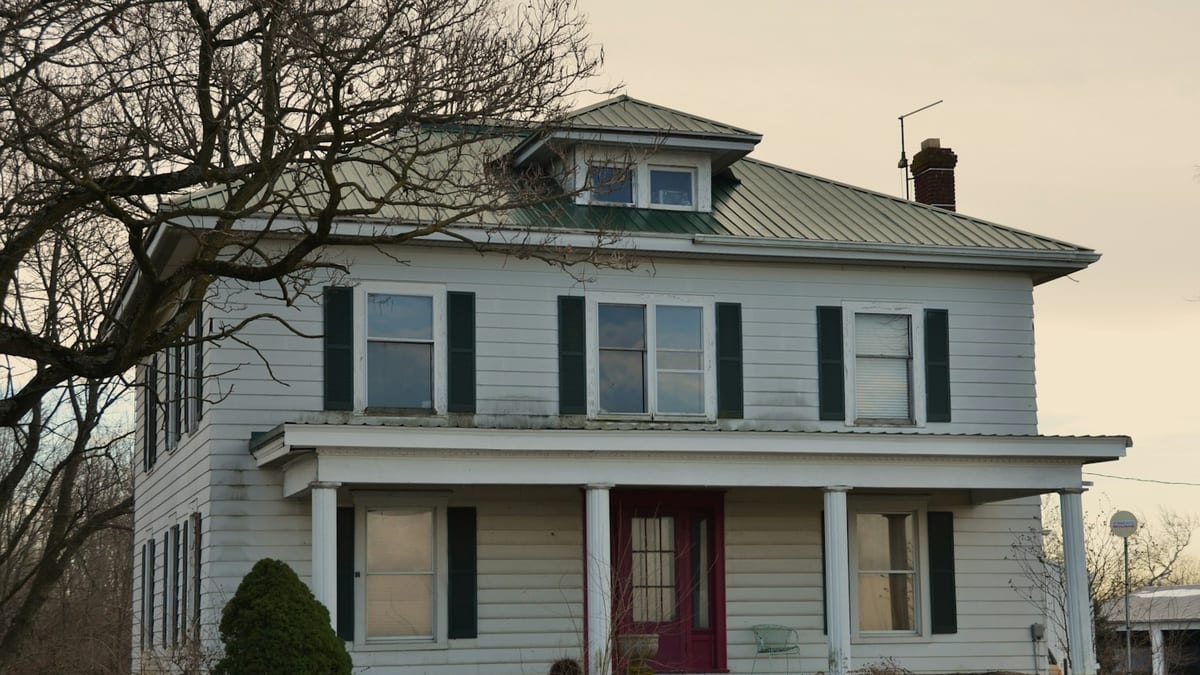
Do metal roofs need snow guards? Not on every slope, but on any slope that drops onto a place where people walk or park, or onto something that can break. Metal is smooth. Snow on it tends to stay put for days, then let go in one piece. If it lands on open lawn, nobody cares. If it lands on the front step or the driveway, that slope needs snow guards. You decide it one eave at a time, not once for the whole house.
Why snow leaves a metal roof all at once
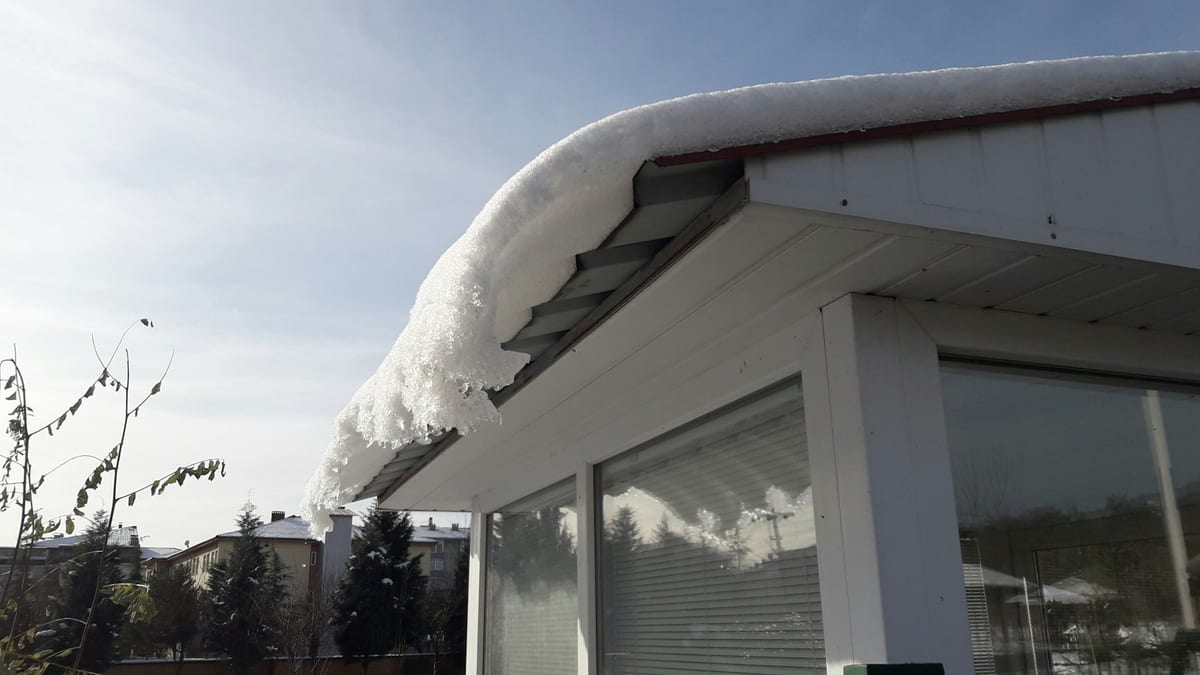
The NRC’s Canadian Building Digest CBD-228, Sliding Snow on Sloping Roofs, gives the normal progression. Heat from the house can melt the snow where it touches the roof. Sun through a thin layer of snow can do the same. That melt lubricates the roof surface. Then a crack opens in the snow, usually near the ridge. What holds the slope back now is the snow below, frozen to the cold eave. The unrestrained snow mass above overwhelms it, and sliding occurs.
Friction is the other half. The digest gives painted steel or aluminum a friction value of about 0.05, and glass 0.02. Snow, temperature and the state of the surface all change that number, but on a painted panel the moving snow meets very little resistance.
Our read: a rough shingle surface grips snow better than a painted panel. That’s why a house that never had a snow slide can have one the first winter after a metal roof goes on.
Where the snow lands
Sliding snow doesn’t drop straight down from the eave. It leaves the roof moving, so it flies out. In the digest’s worked example, snow that starts at the ridge and slides with no friction lands about 5 m from the eave. That is an upper bound. It is still prudent to assume zero friction unless the surface is very rough. The real distance on your house depends on the height and length of the slope. The danger zone is still wider than the drip line.
That zone decides the question. You can check it from the ground. We’d start at the front door. Walk around the house when the roof is bare and stand well back from each eave. Never go up on the roof to look. Then note what sits in the landing area:
- A door or entry step. This is the first place to protect. A main entrance under a metal slope is the textbook case for snow guards.
- A walkway or deck stairs. Anywhere someone walks in winter, including the path to the woodpile or the hot tub.
- The driveway or a parking spot. A slide can dent a car roof or bury it.
- A gas meter or a furnace vent. Sliding snow can bend a meter or block a vent that the house needs to breathe.
- A lower roof. Snow from a two-storey slope that lands on a porch roof or an attached garage adds weight the lower roof may not have been built to catch.
- Eavestroughs. A slide can tear them off the fascia.
- Gardens and shrubs you’d rather not see flattened each March.
Here’s the part that’s easy to miss. The damage shows up below, and the cause is the slope above it. The call in March is about a bent eavestrough or a crushed railing. The fix belongs on the roof. Book an eavestrough installer for the trough itself, but settle the slope above it first, or the next slide does the same thing.
A slope that drops onto open yard can usually shed its snow freely. The digest’s conclusion gives two choices. Either stop the snow from sliding, or keep the area below clear and clearly marked as hazardous for the duration of the snowy season. For a back slope over a lawn, the second choice costs nothing. For a front door, it isn’t a real choice.
Why the snow load around Stayner matters
Supplementary Standard SB-1 of the Ontario Building Code establishes the climatic data for areas throughout Ontario. Stayner was one of the places merged to form Clearview Township. Clearview uses the Collingwood row of that table. The township’s climatic data sheet, revised February 7, 2023, is based on the 2012 Ontario Building Code. It gives a ground snow load of 2.7 kPa, as a design value for a 50-year return period. Note the date and the code year on that sheet.
It also means snow guards aren’t a small accessory here. When guards hold the snow on the roof, the snow pushes on the guards. The digest works through one case: a 6 m long roof at 18° (a 4 in 12 pitch) under 60 cm of snow. The force on a snow fence at its lower edge could be as high as 2.7 kN per metre of fence. Don’t mix that 2.7 up with the 2.7 kPa above. One is the push on the guards. The other is the snow on the ground. When a snow fence is added, the load capacity of the roof as well as the fence should be checked. A guard count picked by rule of thumb skips that check.
What changes once the snow stays on the roof
Snow guards slow the slide or hold the snow back. They also start a second problem, and you should know it before they go on.
Held snow melts slowly, from the heat loss below and the late winter sun. Dangerous icicles and ice dams may form. Where a roof slopes toward a sidewalk or an entrance, the constant dripping can build ice on the walk. Two things go with snow guards:
- Room for meltwater. Leave the gap the guard maker specifies under a snow fence, so meltwater and winter rain can drain.
- A cold roof deck. The less heat that leaks into the attic, the less the held snow melts from below. If you already get big icicles, look at attic insulation and ventilation along with the guards, not after.
The two kinds of snow guard
A snow guard sits on the lower part of a metal slope, above the eave. One maker, Alpine SnowGuards, describes the pad-style kind as devices that add friction to the roof, so snow and ice melt and release in small amounts. Guards come in two broad layouts:
- Pad guards. Small cleats set in a staggered pattern across the lower slope. Each one holds a little snow, and together they hold the field.
- Rail or bar systems. One or two continuous rails run along the slope, like a short fence. They hold a solid band of snow.
How they attach matters more than the shape. On a standing seam metal roof, clamp-on guards grip the raised seam. The panel itself is not pierced. On exposed-fastener steel panels, guards are usually screwed through the panel. Each of those holes has to be sealed like any other roof fastener. Ask whoever quotes the roof which kind your roof would get. Ask how the holes, if any, are sealed.
Adding snow guards to a roof you already have
We get it. The roof is already up, and nobody wants new holes in it. Clamp-on guards on standing seam are the simpler retrofit, because nothing goes through the panel. Fastened guards on an older exposed-fastener roof do mean new holes, so a roofer has to check the panels, the fasteners and what is under them before any guards go on.
The easiest time to plan them is before the roof goes on. When you book a new roof, bring the list you made from the ground: which door, walk, meter or lower roof sits under which slope. Then ask whoever quotes it whether guards over those spots are part of the job. The layout and the attachment get settled before the first panel goes up.
What we can’t see from here is your roof: the pitch, the length of each slope, and what sits under it. That’s what someone has to see in person.
Here is what we do on our own metal jobs. We do a full tear-off and inspect the deck. We replace rotted plywood while the roof is open. Check your slopes from the ground first. Then request a roof inspection. Our page on metal roof installation in Stayner shows how we work.
Call (705) 770-0636. We work in Wasaga Beach, Collingwood, Stayner, Barrie, Midland and Simcoe County.
Questions about snow guards on metal roofs
Do all metal roofs need snow guards?
No. A slope needs them when its snow would land on a door, a walkway, a deck, a car, a vent or meter, or a lower roof. A slope over open yard can shed its snow if the area below is kept clear in winter.
How many snow guards do I need?
It depends on the pitch, the length of the slope and the ground snow load where you live. Clearview’s climatic data sheet, based on the 2012 code, gives 2.7 kPa for the ground snow load. Be wary of a count given without anyone asking about the pitch or the slope length.
Can snow guards damage my roof?
Guards screwed through the panel add holes, and each hole needs to be sealed. Clamp-on guards for standing seam roofs grip the seam and don’t pierce the panel. Either way, held snow adds load, so the roof and the guards should both be checked for it.
Can I add snow guards after the roof is on?
Yes. It’s simpler on a standing seam roof, where the guards clamp to the seams. On an exposed-fastener roof, the guards are fastened through the panels, so a roofer should check the panels and how they are fastened first.
Do snow guards stop ice dams?
No. They hold snow on the roof, and held snow can feed icicles and ice dams as it melts. Attic insulation, air sealing and ventilation, plus a drainage gap under the guards, reduce that risk. They do not remove it.